
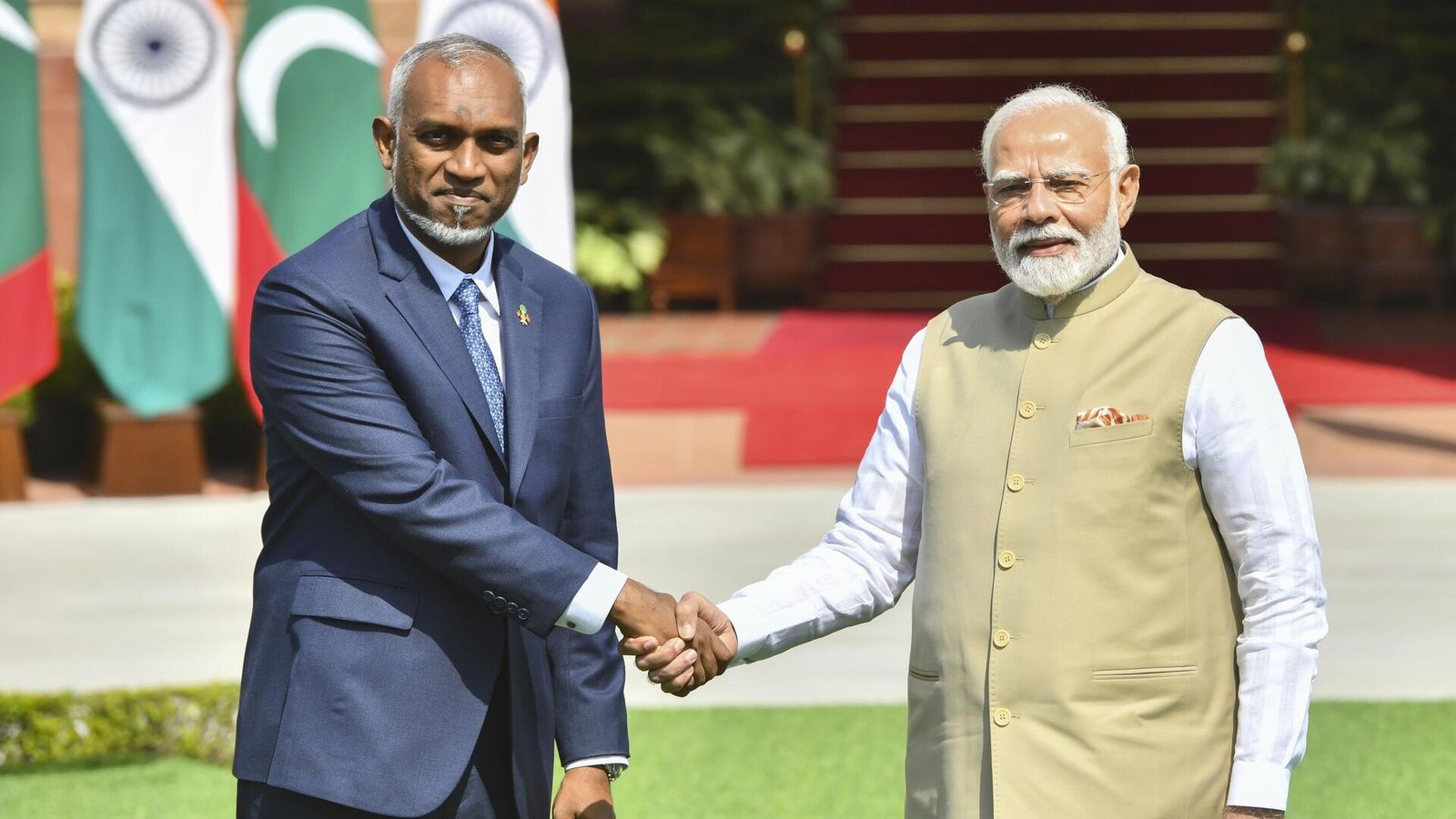
(Photo: File, GSM News )
Male’ Maldives, 30 April 2026 – Ibrahim Shaeman, Asia Desk, GSM News:
In the wake of the U.S-Israeli war against Iran, some states have been caught in their own cold war-esque tug-of-war of political alignments. In this essay, we will analyze the case from the perspective of the Republic of Maldives. Furthermore, we will examine India as a major actor in this crisis with a focus of their resumption of refining Russian crude and the importance of Maldives maintaining their cordial relations with India for a number of strategic reasons.
Historical Context
Firstly, akin to France’s foreign policy of “Gaullism” during the reign of Charles de Gaulle in the 1960s and thereafter, India has had a similar foreign policy of leading a “third way” path in geopolitics with regards to a multipolar world order. The Indian doctrine of “strategic autonomy” dates back to their Non-Alignment Movement and later the Multi-Alignment Policy. The core principle behind this doctrine is the belief that India has both the capacity and the potential capabilities to champion their own regional geopolitics.
The Turning Point
After the Russian invasion of Ukraine in 2022, USA and many other western states moved to impose harsh embargos and sanctions on Russia, and that directive extended to India as well. However, India is an emerging power in the south Asian region, and a massive component of that is maintaining the economic prosperity and the stability of the supply chains in the regions of the Indian subcontinent, Bay of Bengal, and the broader Indian Ocean. By 2025, India’s loyalty to USA was proving to be too costly, and United States’ threat of increasing tariffs on India in the event of the latter’s resumption of importing Russian crude was becoming a point of major contentions within Indian domestic politics. Thus, in a stunning display of sovereign resilience, New Delhi resumed the import and refinement of Russian crude despite the pressure from Washington.
Implications for The Maldives
India has been Maldives’ closest neighbor and one of the friendliest allies for centuries. While different administrations prioritized Maldives-India relations to varying degrees, all administrations ultimately recognize the essentiality of preserving warm relations with India for a number of reasons. Critics may point to religious tensions between the Hindu majority of India and Indian Muslims domestically and digitally originating from India as a reason for Maldives (a predominantly Muslim state) to rethink and reevaluate their bilateral relations. However, while constructivist bonds of religious affinity hold significant weight in public discourse, they are often a luxury that a small-island state like the Maldives cannot afford to prioritize over realist concerns such as state survival. For Maldives, the pursuit of ideological solidarity must be weighed against the cold realities of calculated statecraft. As of April 2026, the current administration under President Dr. Mohamed Muizzu is actively seeking a supportive energy supply deal from India. This initiative pivot to diversify Maldives’ fuel import sources beyond the existing suppliers in the middle east due to the recent disruptions caused by the ongoing kinetic warfare is a testament to our aforementioned constructivist-realist compromise.
U.S.-Israeli War against Iran & the Current Fallout
On February 28th 2026, with the commencement of Operation Epic Fury by the United States (and joined by Israel) came the de-facto closure of the Strait of Hormuz by Iran. The Strait of Hormuz accounts for an estimated 25% of global seaborne oil trade and by March of 2026, Brent Crude prices (global benchmark for oil prices) rose by 60% effectively soaring per barrel costs to more than $120 (International Energy Agency, 2026; BBC, 2026). In addition, shockwaves were sent to global stock markets by targeted strikes on oil & gas facilities in the middle east regions such as those in Kuwait, Bahrain, and Qatar (NPR, 2026). Moreover, reports indicate that Iran also attempted to strike the U.S.-UK military base in the Indian Ocean, Diego Garcia (CNN, 2026). This expands the initial conflict range for the U.S.-Israeli war against Iran further encompassing Maldivian territories within the potential conflict zone as well. Thus, following a period of Indian compliance with Western energy sanctions in early 2026, the deal proved to be yet again untenable driven by the collapse of Middle Eastern supply lines. Subsequently, New Delhi executed a decisive pivot, drastically increasing its imports of Russian crude to stabilize the South Asian energy markets by March/April of 2026.
A Case for Prospective Bilateralism
Maldives is still heavily reliant on imports to sustain its energy grid as indicated by 2025 reports that almost 10% of the GDP (~10 billion MVR) was allocated for energy imports (Edition MV, 2026). Likewise, while recent acquirements such as the surveillance drones and naval vessels from Türkiye signify Maldives’ interest in upgrading its military/defence capabilities; as of 2026, Maldives do not publicly possess any modern-grade anti-air defence systems capable of intercepting IRBMs or hypersonic projectiles. As the current conflict between Iran and USA shows potential to expand as far south as Diego Garcia, the lack of a modern-grade Maldivian anti-air “umbrella” is a haunting outlook. Hence, from a realist perspective, only by deepening our partnership with India (leveraging New Delhi’s anti-missile capabilities and its resilient Russian-sourced energy surplus) can the Maldives acquire the dual-layered security required for state survival. In the “worst-case scenario” of a prolonged expansion of kinetic warfare, this strategic bilateral alignment is not merely a diplomatic choice, but a necessary safeguard against regional collapse.